EMR vs EHR Software: Complete Guide for Doctors & Clinics in India
Understand the differences between EMR and EHR software, compare cloud options, ABDM compliance, implementation costs, and selection criteria for Indian medical practices.
What Is EMR Software? Definition & Core Concept
An Electronic Medical Record (EMR) software is the digital equivalent of a paper chart in a clinician's office. It contains a patient's medical and treatment history collected within a single medical practice.
EMRs allow doctors to record patient diagnoses, track vitals over time, write e-prescriptions, order lab tests, and monitor immunization dates. The primary goal of an EMR is to streamline internal clinical workflows and improve patient care within that specific practice.
What Is EHR Software? Comprehensive Health Ecosystems
An Electronic Health Record (EHR) software goes beyond standard clinical data collected in a single doctor's office. EHRs are designed to contain a broader view of a patient's health journey and are built to share information across different healthcare providers, laboratories, specialists, and hospitals.
In India, national initiatives like the Ayushman Bharat Digital Mission (ABDM) leverage EHR principles to create interoperable ABHA (Ayushman Bharat Health Account) IDs, allowing medical data to travel securely with the patient across certified health facilities.
Detailed Comparison: EMR vs. EHR Software
| Comparison Dimension | Electronic Medical Record (EMR) | Electronic Health Record (EHR) |
|---|---|---|
| Data Scope | Medical records confined to one clinic or practice | Comprehensive multi-provider patient health journey |
| Data Mobility | Stays within the internal practice database | Designed to travel with patient across hospitals & labs |
| Interoperability | Local module integration (OPD, Billing, Pharmacy) | Nationwide interoperability (ABDM, FHIR, HL7) |
| Setup Complexity | Fast, same-day setup for solo or group OPDs | Requires multi-department workflow configuration |
| Ideal For | Independent OPD clinics, polyclinics, specialists | Multi-specialty hospitals & integrated health networks |
EMR vs EHR vs Practice Management Software
Doctors often evaluate Practice Management Software (PMS) alongside EMR and EHR systems. While EMR focuses on clinical notes and prescriptions, Practice Management Software handles administrative tasks like appointment scheduling, front-desk token queues, billing, and staff management.
Modern platforms combine all three dimensions—EMR clinical charts, Practice Management workflows, and ABDM EHR interoperability—into a single unified cloud system.
What Is Cloud EMR? Accessibility, Security & Mobility
Traditional desktop EMR software required local server installation, manual backups, and tied the doctor to a specific computer in the clinic. Cloud EMR systems store data securely in encrypted cloud data centers in India.
With Cloud EMR, doctors can view patient charts, check appointment schedules, and issue digital prescriptions from any web browser on a laptop, iPad, or smartphone with automated real-time backups.
Benefits of EMR Systems for Doctors
- Eliminate Handwriting Errors: Legible, printed, or PDF prescriptions prevent pharmacy dispense mistakes.
- 30-Second Prescribing: AI auto-suggestions and custom treatment templates save hours of consultation time daily.
- Instant Vitals & History Search: View past diagnoses, drug allergies, and vital sign trends instantly.
- Automated Revenue Tracking: Monitor daily OPD collections, consultation fees, and outstanding bills without manual registers.
Benefits for Patients
- Instant WhatsApp PDF Prescriptions: Patients receive branded digital prescriptions directly on WhatsApp.
- Automated Follow-up Reminders: SMS and WhatsApp alerts reduce missed review appointments.
- Digital Health History: Patients maintain clean digital records of past prescriptions and diagnostic reports.
EMR Workflow Adaptation by Practice Type
| Practice Type | Primary EMR Needs | Recommended Solution Architecture |
|---|---|---|
| Solo OPD Doctor | Fast prescribing, WhatsApp PDF, simple billing | Lightweight Cloud EMR with quick-select templates |
| Polyclinic / Multi-Doctor | Central token queue, doctor-wise billing, shared pharmacy | Multi-user Cloud EMR with role-based permissions |
| Multi-Branch Clinic Chain | Cross-clinic patient lookup, centralized inventory & financial reporting | Centralized Multi-Tenant Cloud EMR Dashboard |
EMR vs. Paper Records: Cost & Time Impact
Paper registers are prone to damage, misplacement, and offer zero searchable history. Digitizing a clinic with EMR software reduces patient consultation overhead by up to 40%, eliminates missing billing charges, and ensures compliance with Indian healthcare regulations.
How RxDoctor Fits Clinical EMR & EHR Requirements
RxDoctor bridges the gap between fast single-clinic EMR workflows and national ABDM EHR compliance. Designed specifically for Indian doctors, RxDoctor provides 30-second prescribing, instant WhatsApp PDF sharing, integrated OPD billing, pharmacy management, and ABHA health ID linking in a single cloud platform.

Digitize Your Practice in 10 Minutes with RxDoctor
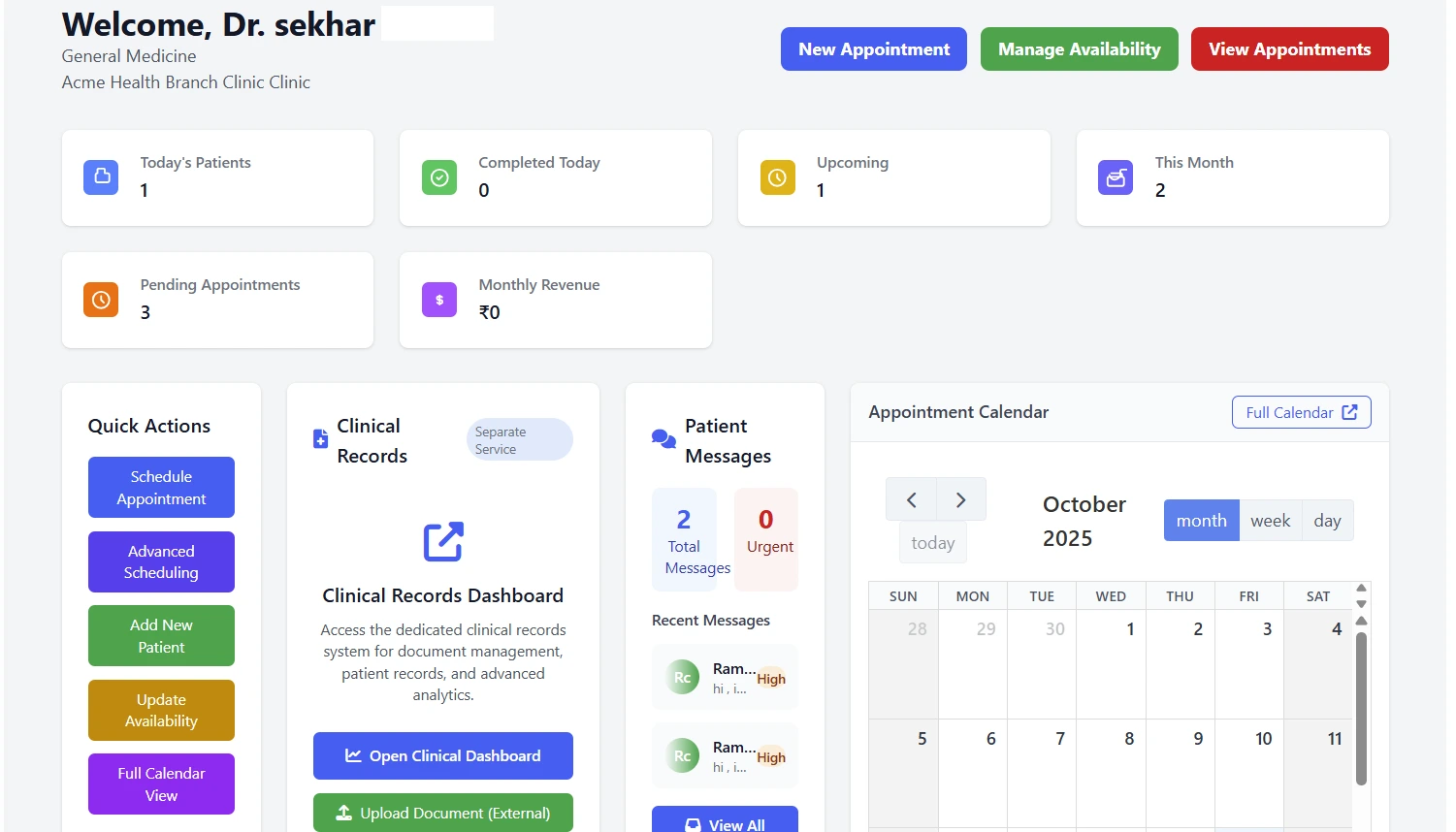
The complete cloud software for Indian doctors. Fast e-prescriptions, online appointments, OPD token queue, GST billing, and pharmacy inventory — all connected.
Disclaimer: This article is published for informational purposes to guide medical professionals and clinics. Software terms, feature specifications, and healthcare regulatory references are subject to updates.