Best EMR Software Guide 2026: Evaluation Methodology, Vendor Comparison & Features
An exhaustive, evidence-based evaluation guide for doctors selecting EMR software, medical EMR systems, reviews, vendors, and cloud solutions in India.
How We Evaluate EMR Systems: Our Objective Methodology
Evaluating Electronic Medical Records (EMR) software requires a systematic analysis grounded in actual clinical OPD workflows rather than generic marketing claims. Selecting medical EMR software impacts physician consultation velocity, prescription accuracy, patient retention, and regulatory compliance.
Our research team evaluates medical EMR software systems across 12 core clinical and operational dimensions to help doctors and practice managers make informed, evidence-based software decisions.
The 12 Evaluation Dimensions for Clinical EMR Systems
- 1. Prescription Speed & Ergonomics: Ability to issue a complete, branded PDF prescription in under 30 seconds using intelligent drug dosage auto-suggestions.
- 2. Patient Record Searchability: Instant retrieval of past visit history, diagnosis logs, prescribed drugs, and vitals trend charts in 1-click.
- 3. Appointment & Token Management: Online booking capabilities, walk-in token displays, and automated WhatsApp/SMS appointment confirmations.
- 4. ABDM & ABHA Integration: Compliance with Ayushman Bharat Digital Mission (M1 ABHA creation, M2 health record linking, and M3 data exchange).
- 5. Integrated Billing & Financial Reporting: Automated GST invoicing, multi-payment tracking, daily cash collection summaries, and consultation fee reports.
- 6. Pharmacy & Inventory Integration: Real-time stock deducts, batch management, low-stock reorder triggers, and expiry alerts.
- 7. Diagnostic Lab Interface: Automated test ordering, sample tracking, and direct attachment of lab PDF reports to patient health charts.
- 8. Multi-Branch Centralized Control: Multi-clinic administration allowing practice owners to manage multiple OPD locations from one dashboard.
- 9. Cross-Device Mobility: Native compatibility across desktop PCs, laptops, iPad, Android tablets, and smartphones without local software installation.
- 10. Security & DPDP Compliance: Encryption of data in transit (TLS 1.3) and at rest (AES-256), AWS cloud hosting in India, and DPDP Act compliance.
- 11. Data Export & Ownership: Freedom for clinic owners to export full patient databases and prescription history in standard formats (CSV, PDF, JSON).
- 12. Total Cost of Ownership: Transparent, predictable pricing without hidden setup fees, per-prescription surcharges, or forced multi-year locks.
Comparing EMR Software Categories for Indian Clinics
| Evaluation Dimension | Free / Open-Source EMR Software | Enterprise Hospital EMR | RxDoctor Cloud EMR Software |
|---|---|---|---|
| Implementation Time | Requires local server setup (3-7 days) | Heavy deployment (4-12 weeks) | Same-day instant cloud onboarding (<10 mins) |
| Prescribing Ergonomics | Basic text boxes (1-2 mins per Rx) | Complex multi-tab forms | AI Quick-Select Rx Templates (<30 secs) |
| Patient Communication | Manual PDF download & email | Patient portal login required | Automated 1-click WhatsApp PDF dispatch |
| ABDM Interoperability | Rarely updated for ABDM | Enterprise HL7/FHIR integration | Built-in ABHA creation & record linking |
| Infrastructure Cost | Requires local server hardware & IT staff | High server & licensing investment | Zero hardware cost; works on standard browser |
| Data Backups | Manual database backups needed | Managed by hospital IT team | Automated real-time cloud backups in India |
How RxDoctor Addresses These Clinical Requirements
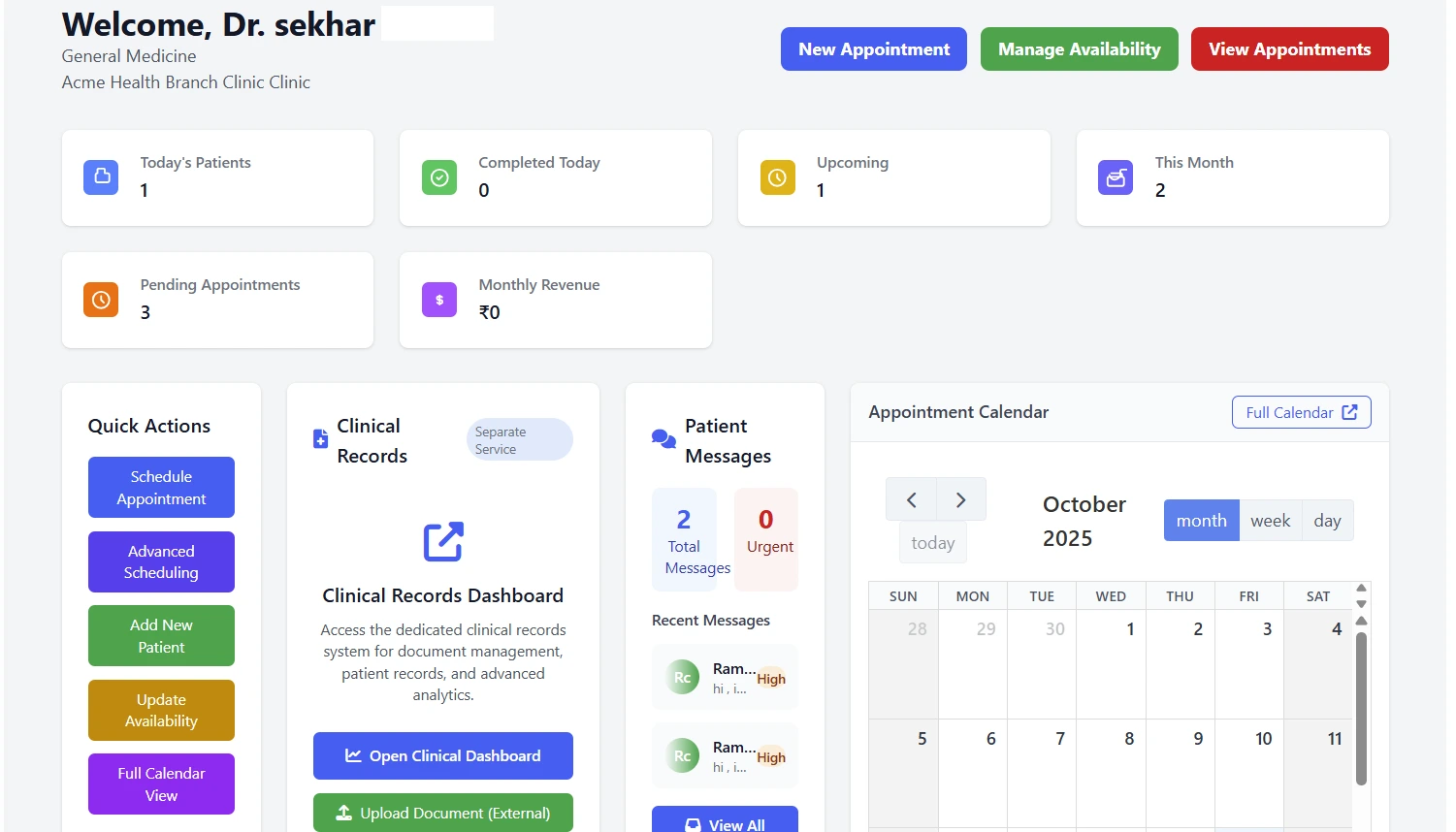
RxDoctor was engineered specifically around the high-volume OPD workflows of Indian doctors. By combining 30-second e-prescribing, automated WhatsApp PDF delivery, integrated GST billing, and full ABDM compliance, RxDoctor offers a streamlined, cloud-native EMR platform built for modern practices.

Digitize Your Practice in 10 Minutes with RxDoctor
The complete cloud software for Indian doctors. Fast e-prescriptions, online appointments, OPD token queue, GST billing, and pharmacy inventory — all connected.
Disclaimer: This article is published for informational purposes to guide medical professionals and clinics. Software terms, feature specifications, and healthcare regulatory references are subject to updates.